Learn Quran with TajweedFor families in the USA

Online Tajweed Classes for Kids

Help your child learn Quran with Tajweed through live 1-to-1 online classes. Our qualified Quran teachers teach Tajweed rules, correct pronunciation and accurate Quran recitation step by step.

Register for Free Trial Now

No credit card required during signup · Up to 3 free classes

  • Highly Qualified Male & Female TeachersOne-on-One Interactive Classes
  • Up to 3 Free Trial ClassesSee a Real Class Before You Pay
  • Flexible SchedulingLearn at Your Own Pace

What are the Tajweed rules a beginner learns first?

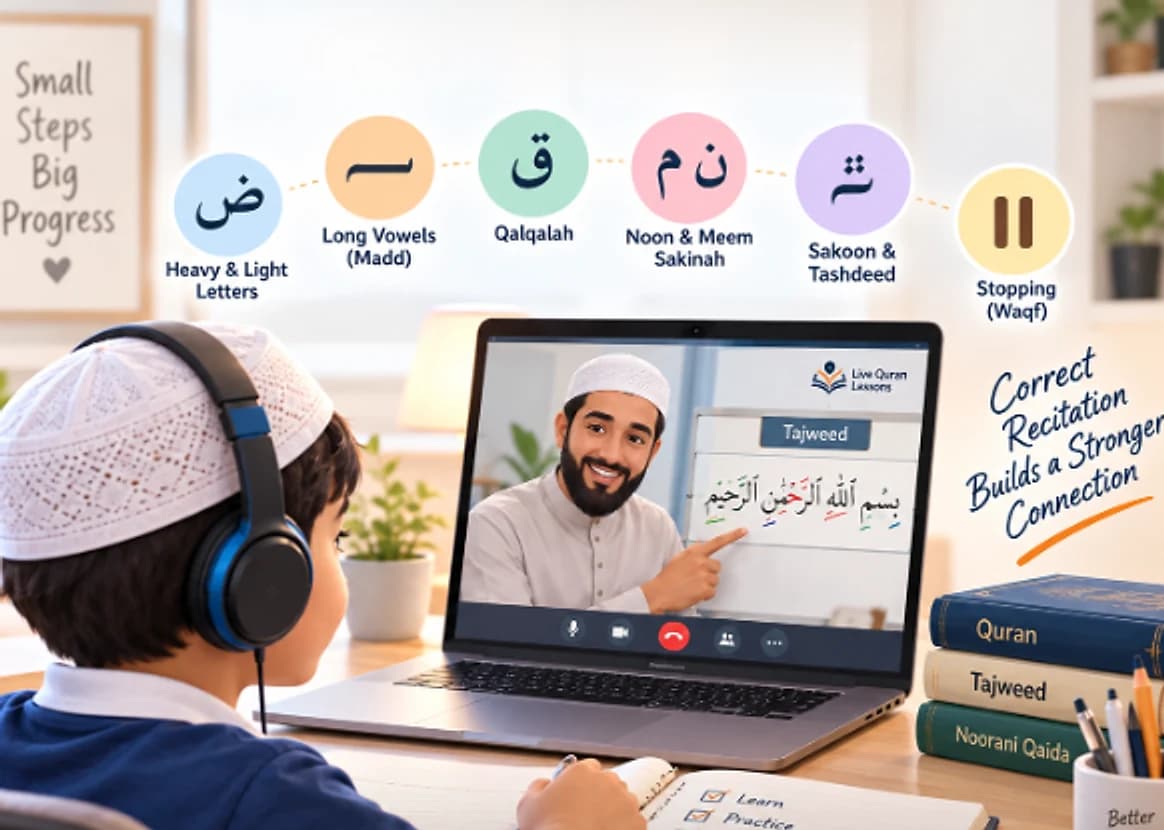
At Live Quran Lessons, a beginner learns 6 Tajweed rules first: heavy and light letters, long vowels, qalqalah, Noon and Meem Sakin, sakoon and tashdeed, and stopping (waqf). The Noorani Qaida introduces every one of these marks separately, before the Mus'haf, the printed Quran, is opened. On the Mus'haf everything arrives together, inside whole verses, at recitation speed. Our Tajweed course helps your child make that change correctly.

Two Arabic letters can sound almost the same and still make two different words. A short vowel held too long, or a long one cut short, changes the word into another. Tajweed is the set of rules that keeps every word sounding exactly as it should. Here is an explanation of each of the 6 in plain words.

Illustration of a boy in headphones in a live online Tajweed class, his teacher pointing to the Bismillah on the laptop screen, under icons for the 6 beginner rules

Heavy and light letters

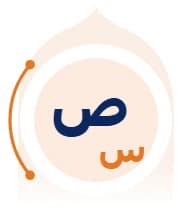
A heavy letter is pronounced with a full mouth, a light one is not. 7 Arabic letters are always heavy. Seen and saad are the classic pair: one light, one heavy, and the word depends on which is recited.
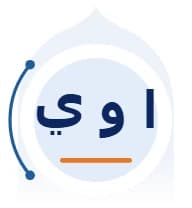
Long vowels, maddah and leen

A long vowel is the stretching of a sound, and a maddah sign stretches it further still. Leen is the soft sound of waw or yaa after an a sound, as in bayt, the Arabic word for house.

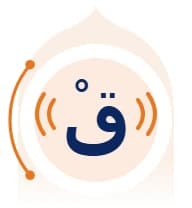
Qalqalah

A short bounce given to 5 letters whenever they carry no vowel: qaf, the heavy taa, baa, jeem and dal. The bounce is strongest when the letter is the final sound before the reciter stops.

Noon Sakin and Meem Sakin

A noon or a meem with no vowel is pronounced according to the letter that follows it: clearly, merged into that letter, or hidden with a soft nasal sound. Before baa, a noon sakin also turns into a meem sound.

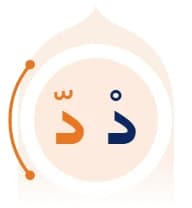
Sakoon and tashdeed

Sakoon is a small mark above a letter: the letter carries no vowel of its own. Tashdeed is a small w-shaped mark: the letter is doubled and held for a moment, exactly like the double l in Allah.

Stopping (Waqf)

The small marks above the line that show where a reciter stops for breath, where a stop is permitted, and where it is not. Stopping in the wrong position can change the meaning of a verse.

Book your free Tajweed trial class

No credit card required during signup · Up to 3 free classes

Up to 3 free classes, and nothing to cancel. We reply on WhatsApp, and a first class can start within an hour or two.

How does the teacher correct my child's pronunciation?

The teacher corrects each word the moment your child recites it, with the Mus'haf shared on screen. If a heavy letter comes out light, or a long vowel is cut short, the teacher stops on that word and puts it right.
  • Every Tajweed rule is learned on the words where it is used, not memorized first as a list.
  • Every teacher holds a qualification from a recognized Islamic institution.
  • You can sit with your child and listen to any lesson, without asking us first.
  • After every class, a short note in plain English is posted in your family WhatsApp group: what was covered, what to practise, and a link to the Para in our online library.
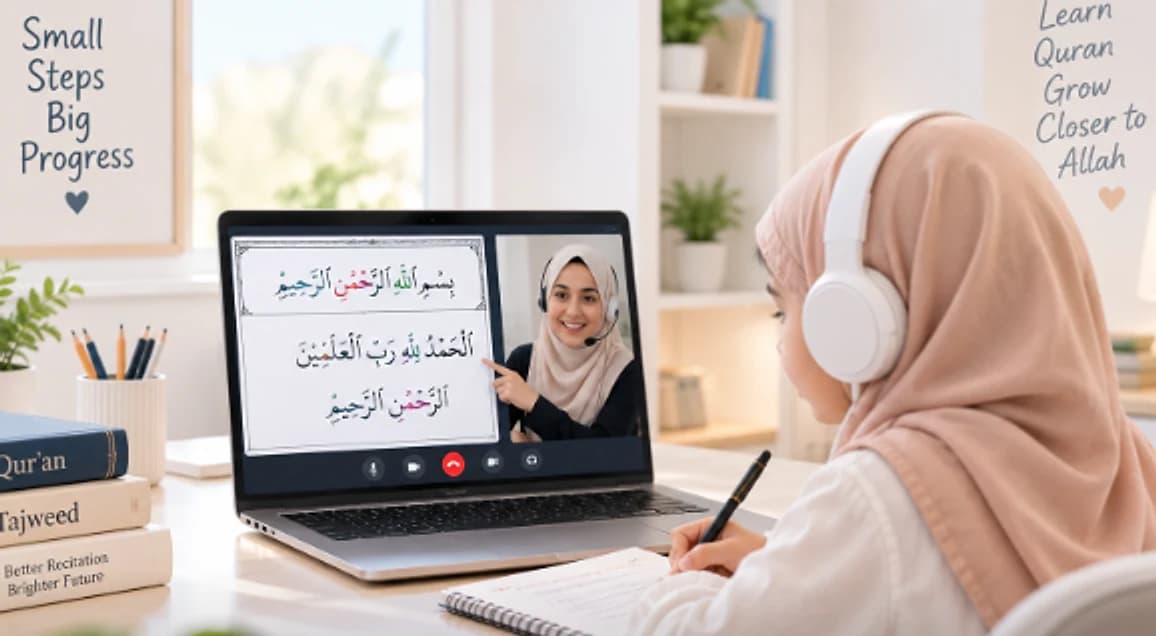
Illustration of a girl in a hijab and headphones in a live online Tajweed class, her female teacher on the laptop screen pointing to the opening verses of Surah Al-Fatiha

Where does my child start learning Tajweed?

At the point they have already reached, not at page 1 for everyone. When you book, tell us on WhatsApp whether your child is a complete beginner or has learned previously. The free trial classes show the teacher exactly where your child stands.

  1. Partway through a Qaida

    The Noorani Qaida is finished first, so every letter is recognized and pronounced correctly. Only then does your child begin recitation from the Mus'haf.

  2. Reciting from the Mus'haf, rules not yet known

    This is where the course begins. Your child recites a line, and every beginner rule is corrected immediately, the first time it appears.

  3. Reciting with the beginner rules in place

    The course carries on into advanced Tajweed: all 17 articulation points, the positions in the mouth and throat a letter comes from.

Know your makharij

What does my child learn in advanced Tajweed?

Your child learns the makharij: the 17 points where the Arabic letters are made, grouped in 5 areas.

  • The open mouth

    1 point

    The long vowel sounds.

  • The throat

    3 points

    6 letters, from the deepest point to the nearest.

  • The tongue

    10 points

    18 letters, more than anywhere else.

  • The lips

    2 points

    4 letters: faa, baa, meem and waw.

  • The nose

    1 point

    Ghunnah, the nasal sound.

Each point is practised inside real verses, and the teacher corrects a letter the moment it comes from the wrong place.

Basic or advanced Tajweed: which does my child need?

Most children start with the basic rules and then move on to advanced Tajweed. The free trial classes show the teacher which level your child is ready for.

Basic Tajweed for beginners

For a child who reads Arabic letters and words and is starting to recite from the Mus'haf. Lessons are 30 minutes, 1-to-1, 2 to 5 days a week.

  • Heavy and light letters
  • Long vowels, maddah and leen
  • Qalqalah on its 5 letters
  • Noon Sakin and Meem Sakin
  • Sakoon, tashdeed and stopping (waqf)

Advanced Tajweed

For a child who already recites from the Mus'haf with the beginner rules in place. Lessons are 30 minutes, or 45 minutes to 1 hour if you ask.

  • All 17 articulation points (makharij)
  • 3 points in the throat, 10 on the tongue, 2 at the lips
  • The open mouth for long vowels, the nose for ghunnah
  • Telling apart letters made close together
  • The beginner rules, still corrected in every verse

How flexible are the online Tajweed classes?

How many days a week does my child need?

2, 3, 4 or 5, whichever suits your family. More days a week means more lessons every month.

To add a day later, ask in your family WhatsApp group. There is no contract and no minimum term, so you can stop at the end of any month.

Can we move a class or change the teacher?

Yes. Tell us in your family WhatsApp group, and we try to settle it before the next class. The rules we work to:

  • To move a class to another day, tell us at least 1 hour before it starts.
  • To move it later the same day, tell us 2 to 3 hours before it starts.
  • A weekday student can move up to 3 classes a month, and a weekend student up to 2.
  • If your child has not joined, the teacher waits about 5 minutes and then leaves, and no make-up class is given for it.

A different teacher is arranged the same way. If your child's teacher is away, a cover teacher briefed on your child's lesson plan takes the class.

Course at a glance

Is Quran with Tajweed the right course for my child?

Yes, if your child can already read Arabic letters and words: every lesson is recitation from the Mus'haf, the printed Quran. Live Quran Lessons has taught it online since 2019, to families in 15 countries, most of them in the UK and the USA.

Who it is for
A child who can already read Arabic letters and words. A beginner starts on the Noorani Qaida first.
Ages
From 4½ to 17.
Each lesson
30 minutes, 1-to-1, live on Google Meet: usually 20 minutes of recitation and 10 of Islamic Studies. Ask if you want recitation only.
Language
English, or Urdu where that is easier for your child.
What you need
A laptop, tablet or phone with a camera. Nothing to install or buy, and the class link stays the same.

Book your free Tajweed trial

Up to 3 free classes with a qualified teacher, and no credit card at registration.

  • Up to 3 free trial classes
  • No credit card required
  • Qualified male and female teachers
  • A time that suits your family, any time zone

No credit card required during signup · Up to 3 free classes

Real Stories From Our Quran Learning Families

See why families choose our 1-to-1 online Quran classes for their children.

My daughter teacher is really good. She knows how to teach. She is kind yet strict about learning. Management is v flexible too, on our request they sometimes changes time of class. We are 100% satisfied
Muhammad KashGB
As-salamu alaykum, I'm happy to see my children's progress with their Al Quran teacher. They have learned a lot in a short period. So, I highly recommend this program to all my brothers and sisters looking for their children to learn. Thank you so much!!
AishaUSA
My instructor is thorough and she really has patience for me as I am a slow learner. The supervisor is very responsive and they are both quite encouraging to me through my struggle to learn to recite properly. Alhamdulillah! May Allah reward them in their continued efforts, Ameen.
Lakethia RileyUSA
Highly recommended. Well co-ordinated lessons without any tech glitches. Great teacher with lots of patience for young children. Engaging lessons. Kids being taught Quran as well as duas and general Islamic knowledge which is great.
Khurram ShahzadGB
My siblings and I have been taking their classes for over a year now, and all I can say is that I'm incredibly impressed. Staff is very friendly, efficient, and understanding. Would absolutely recommend to anyone looking for online Quran classes!
AsmaaUSA
Excellent service. I am very happy and satisfied that my children are learning from live quran lessons. They have improved so much and have learnt alot. I would highly recommend everyone to live quran lessons.
Tira RashidGB
Always going the extra mile to adjust times and tutors to your preference. JazakAllah khair for all the effort the tutors and the management is making.
Maryam ShaheryarGB
The teacher is amazing. We enjoy her lessons which are clear and the program has a lot of ways to learn Quran I would recommend to any one the administrators are nice and work with you. Thank you
Yasmin HussenUSA
I am very pleased with my son's Quran classes. His teacher explains everything so clearly and teaches him with great care and patience. My son is enjoying his lessons and making very good progress. Thank you for your hard work and dedication. JazakAllah Khair.
Sumaira KanwalGB

Try a free 1-to-1 class first. See how your child does with the teacher, then choose.

Book Up to 3 Free Trial Classes

No credit card required · No obligation · Review excerpts shortened for clarity

Trusted by Families Worldwide

Watch families and students talk about their own experience.

Hear it from your own child next. Up to 3 free classes, and no card at signup.

Book a Free Trial Class

FAQ

The questions parents ask us most, answered.

What is Tajweed?

The rules for how every Arabic letter should sound in recitation. They cover the position in the mouth, the length of each sound, and where a reader may stop.

Can Tajweed be learned online?

Yes. Your child reads aloud to a qualified teacher, who corrects each slip in pronunciation as it happens.

Does my child need to know Arabic first?

They need to be able to read the Arabic letters. If they cannot yet, a beginner starts on the Noorani Qaida.

How long does it take to read with Tajweed?

There is no fixed time. It depends on where your child starts.

Can my child have a longer Tajweed class than 30 minutes?

Yes. 45-minute and 1-hour classes are also provided once regular classes start. Trial classes are 30 minutes.

More questions(13)
What makes your online Quran academy different?

Your child keeps the same qualified teacher every week, at the same time. Every class is one-to-one. After each class the teacher writes a note: what was covered and what to practise.

Are these live Quran classes or recorded lessons?

Live, always. Every class is a live lesson on video with your child's teacher. We never send recordings in place of live lessons.

What will my child learn in online Quran classes?

Beginners start with the Noorani Qaida. From there it is Quran recitation with Tajweed, and after that Hifz, translation or Tafseer, depending on what a family wants. Alongside the Quran your child learns Islamic Studies. Families on 5 days a week keep Friday as Islamic Day, which revises that week's Islamic Studies and adds one new lesson.

Are your online Quran teachers qualified?

Yes, and it is checked before anyone teaches a child. Every teacher holds a qualification from a recognized Islamic institution, and several hold professional degrees as well. Nobody is given a student on an application alone. There is an interview, a document check, training, and a live demo class we sit in on. The academy page sets out each stage.

Who is watching my child's Quran class?

A supervisor. She joins the link about 2 minutes before the teacher and your child, checks that both are online, and listens in as the lesson runs. She is not there to teach: she is there to make sure the class is a good one. If the sound fails, or the teacher is not listening closely enough to your child, she steps in. Every class is supervised, and all our supervisors are female.

How do I schedule my child's Quran class?

Send us your WhatsApp number on the form, or message us on WhatsApp. We ask for your child's age and the times that suit you. A supervisor places your child with a teacher in a slot at that time, in your time zone. We reply on WhatsApp within 24 hours, and usually within hours.

Can we try the online Quran classes before enrolling?

Yes. Take up to 3 free trial classes first. Use them to check the teacher, the timing, and how your child responds before paying anything.

Can parents sit in on the Quran class?

Yes. You are welcome to watch any lesson, without asking first.

What am I committing to, and what if we want to stop?

There is no contract and no minimum term. Fees are monthly, and you pay for the month ahead. If you want to stop, tell us and we will stop. If you need a break instead, any unused balance carries to the next month. Before your regular classes begin, you can withdraw and get a full refund.

How do we stay in touch once classes start?

Through a WhatsApp group we open for your family after the trial classes. It has 4 people in it: you, your child's supervisor, the coordinator and the academy manager. Use it to move a class, ask for a different teacher, or raise anything at all. We try to settle it before the next class.

What do you do with my WhatsApp number?

Arranging your trial class is the only thing we use it for, and we never pass it on to anybody. Once classes start it is the number in your family WhatsApp group.

Is my child safe in an online Quran class?

You are welcome to watch any lesson yourself, without asking first, and a supervisor is listening in on every class. No teacher is given a student until we have checked their certificates and references. We then train them in how we teach, and sit in on a live demo class before they start.

How much do online Quran classes for kids cost?

Live Quran Lessons charges monthly, per child, by the days a week your child attends. 2 days a week is $39, 3 days $49, 4 days $59, and 5 days $65. Each lesson is 30 minutes, 1-to-1.

Book a free trial class

Register Your Free Trial Class
Chat with admissions on WhatsApp